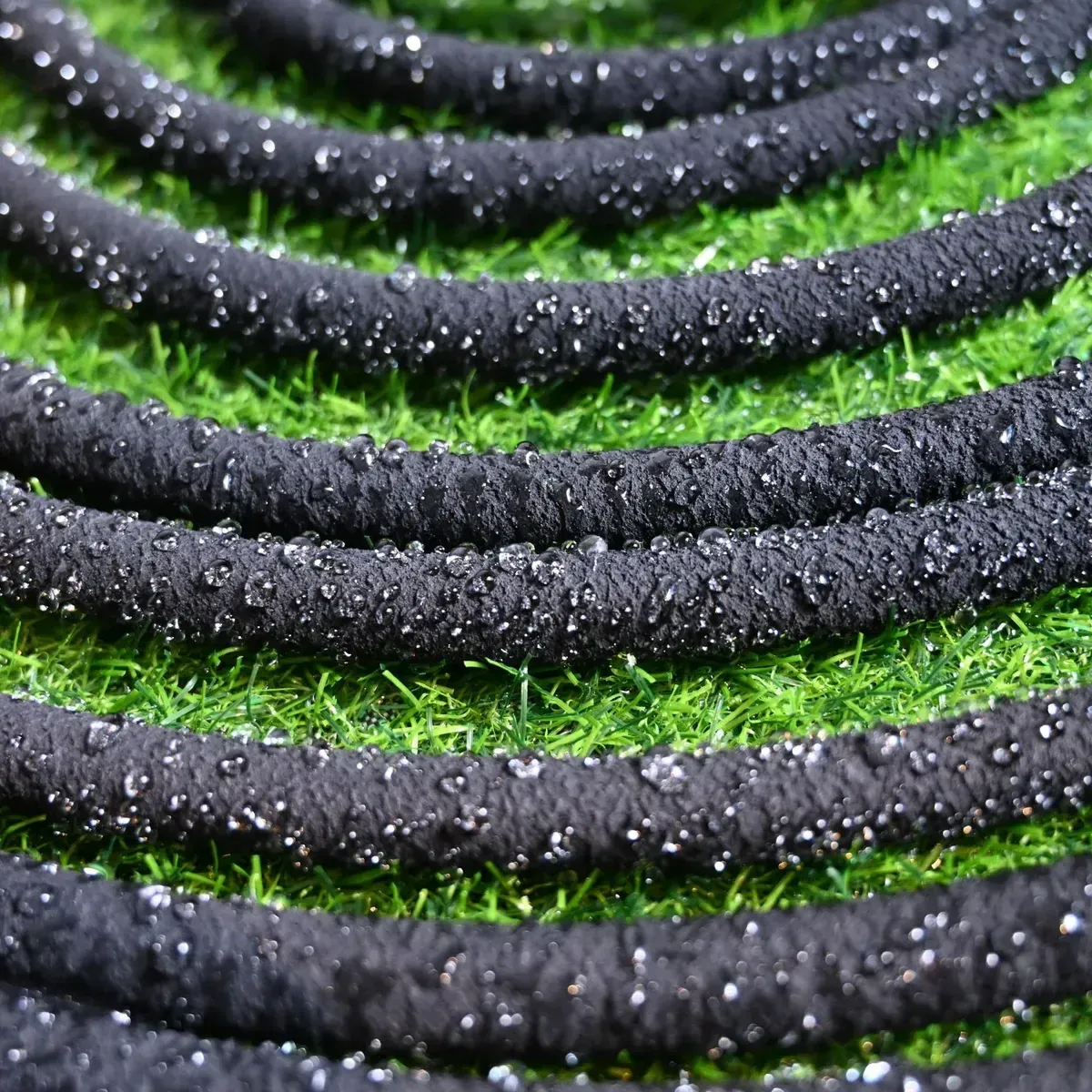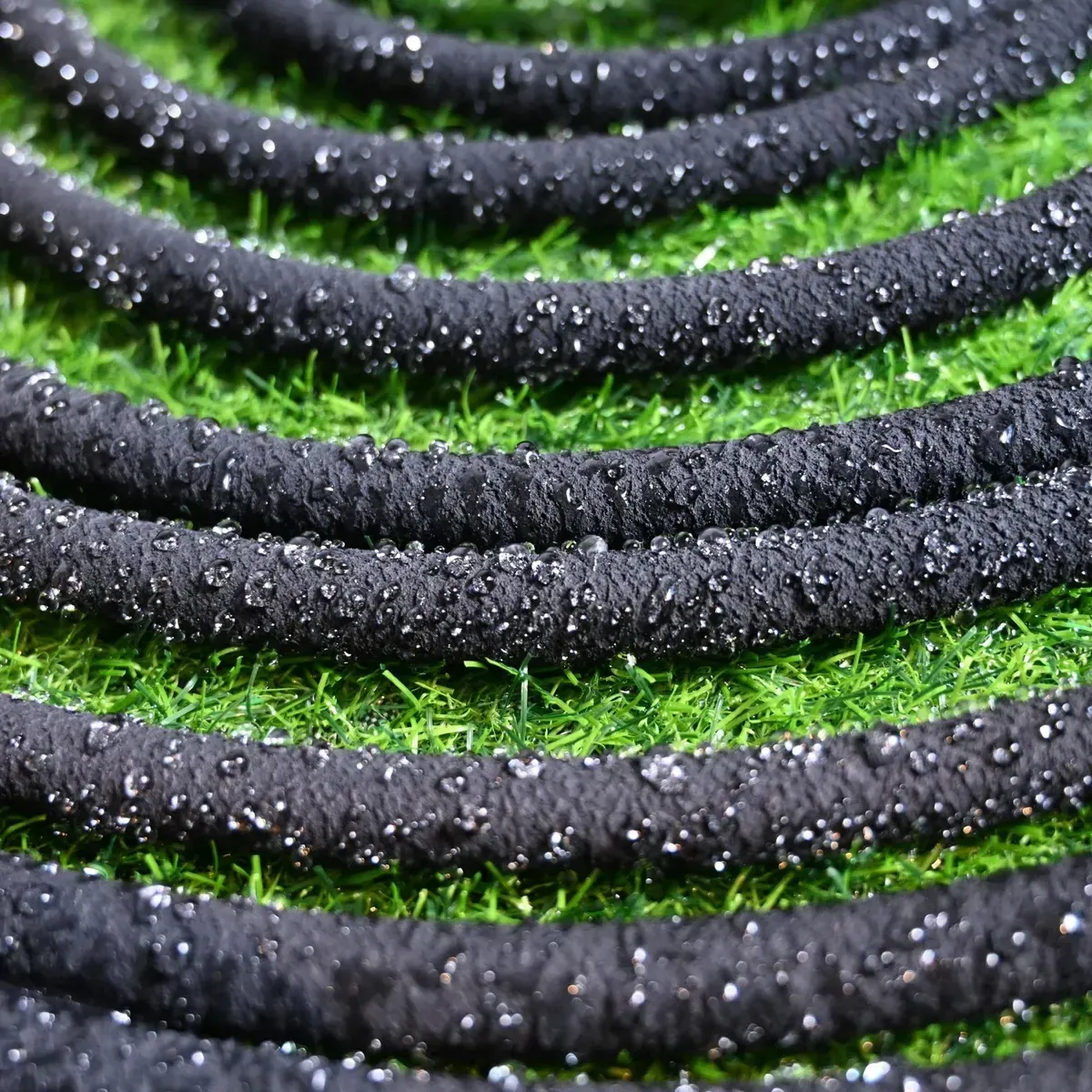

A soaker hose is a porous garden hose that seeps water slowly along its entire length, delivering it to the soil at the root line instead of spraying it into the air. For a buyer, it is a simple, high-repeat garden product with a clear water-saving story, and this guide covers what it is, where it fits, where it does not, and the specs that decide your wholesale price.
What a soaker hose actually is
Picture an ordinary garden hose, then make the whole wall porous. Water pushed into one end does not shoot out the far end; it weeps out through thousands of tiny pores along the full run. Lay it along a bed and the soil wets in a line, right where the roots are. That is the whole idea, and it is why the category sells season after season to gardeners who want to water less and lose less to evaporation.
It goes by several names depending on where you sell. In the US it is a soaker hose. In the UK and Australia the same product is often called a porous pipe, leaky pipe, seep hose or weeping hose. Same function, different label on the shelf.
How it works
Overhead sprinklers throw water over the plant canopy, and a good share is lost to wind and evaporation before it reaches the soil. A soaker hose puts water at the surface, slowly, so it soaks down into the root zone. The US EPA WaterSense program notes that watering efficiently outdoors is one of the biggest levers a household has for cutting outdoor water use (epa.gov/watersense), and irrigation research summarized by the FAO reaches the same conclusion at farm scale: water applied at the root zone is water that reaches the plant. Used correctly, a soaker line uses up to 70% less water than overhead sprinklers on the same bed.
Where a soaker hose is the right product
Soaker hose earns its keep anywhere plants sit in a line or a block:
- Vegetable rows, borders and flower beds
- Hedges and shrub lines
- Raised beds and allotments
- Orchard and vineyard rows
- Greenhouse and polytunnel beds, where a PE seepage hose can be buried for controlled root-zone watering
In all of these, the customer just unrolls the hose, connects it and turns the tap down low. There is almost nothing to assemble, which is why it converts so well for garden retail and marketplace listings.
Where it is not the right choice
Being honest about the limits protects your return rate. A soaker hose is the wrong pick for:
- Widely spaced plants and containers where you want water at specific points. That is a job for drip emitters. Our soaker hose vs drip irrigation guide walks through the trade-off.
- Open lawns, where a sprinkler covers ground faster.
- Very long single runs, where pressure drops off toward the far end and seeping becomes uneven. Long beds are split into shorter runs off a manifold.
- Any consumable-water use. A soaker hose is an irrigation product. It is not rated for any consumable-water use, and a credible supplier will not market it that way.
Materials: what to ask before you buy
Soaker hose is sold under a lot of loose marketing, so pin down the real construction. The durable build we specify on the 1/2 inch round soaker hose is a PE-rubber blend, anti-aging and UV-resistant, made with a thicker wall so it survives a full season of sun. Thin, low-grade rubber is the build that cracks early and drives returns. A foamed-rubber wall seeps evenly and lightly; a reinforced build handles rougher use. Ask for the material name in writing rather than accepting a vague safety-style claim.
Which specs shape a wholesale quote
When you send an enquiry, these are the details that move the price, so decide them up front:
- Diameter: 1/2 inch is the workhorse; 5/8 inch for higher flow and longer runs; 3/8 inch for containers and tight beds.
- Wall thickness and material grade: thicker PE-rubber costs more per meter but returns less.
- Coil length and pricing unit: confirm whether you are quoted per meter, per coil or per case. Cheap per meter can hide an expensive per-coil cost once packaging is added.
- Pressure regulator and end-cap filter: included, optional or sold as a burst-proof kit. These two accessories quietly decide your return rate.
- Packaging: bulk coil, sleeve, hangtag or full retail box.
- MOQ and private label: whether the run carries your brand and how small a first order can be.
Why buyers contact a supplier before ordering
Working pressure, burst pressure and certifications should be confirmed against your actual order rather than copied from a marketing page. A supplier that invents those numbers is a bigger risk than one that marks them contact for spec and confirms them per order. The right first step is a short conversation: send your target sizes and quantities, ask for a spec sheet and sample, and confirm the pricing unit and lead time in writing.
What pitta supplies
pitta is a US-registered soaker hose brand supplied factory-direct from an established Qingdao manufacturing partner. The range covers 3/8 to 5/8 inch in PE-rubber, foamed-rubber and reinforced builds, plus a seepage hose for greenhouse beds and a regulator kit. It ships at low, trial-friendly MOQ and is private-label ready, so you can test a listing before committing to container volume. See the full soaker range.
Deciding whether soaker hose belongs in your line? Send your target sizes and quantities and we will come back with specs, MOQ and lead time. Request a wholesale quote, or ask us about sample availability so you can run one through a season before you scale.