
Soaker hose and drip irrigation both put water at the root instead of over the canopy, but they suit different beds, budgets and customers. For a buyer deciding what to stock, or a retailer explaining the choice at the counter, here is how the two compare, with overhead sprinklers as the baseline they both beat on efficiency.
The short answer
- Soaker hose seeps water along its whole length at the root line. Best for rows, borders, hedges and raised beds. Low cost, almost no setup, fast to sell.
- Drip irrigation delivers water through emitters at fixed points. Best for spaced plants, containers and precise control. More parts, more planning, higher ticket.
- Sprinklers spray over the canopy. Best for open lawns. Simple, but the least efficient of the three outdoors.
If a customer is watering a continuous line of plants, soaker hose is usually the right answer. If they are watering individual, spaced plants, drip usually wins. Most garden ranges carry both.
How each one delivers water
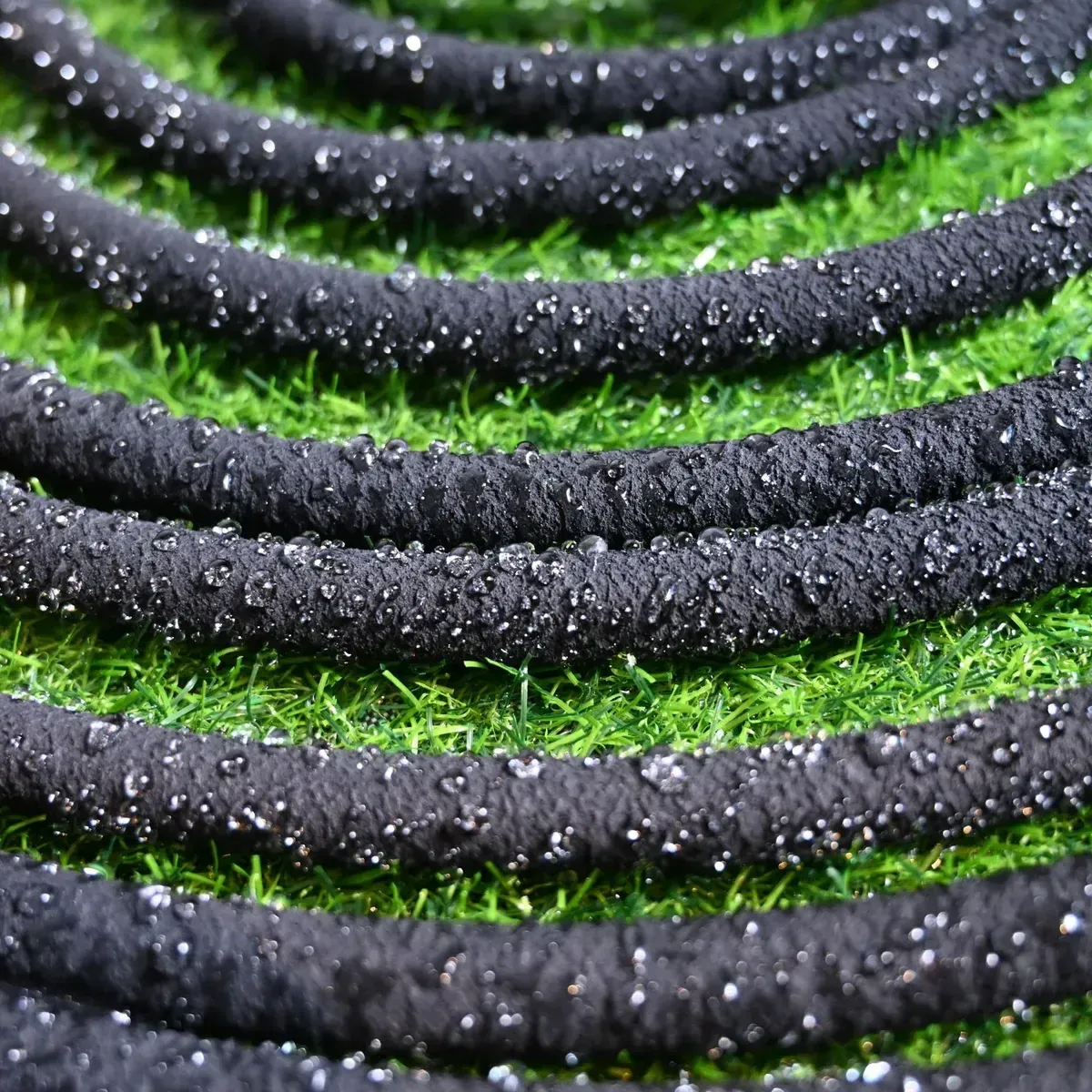
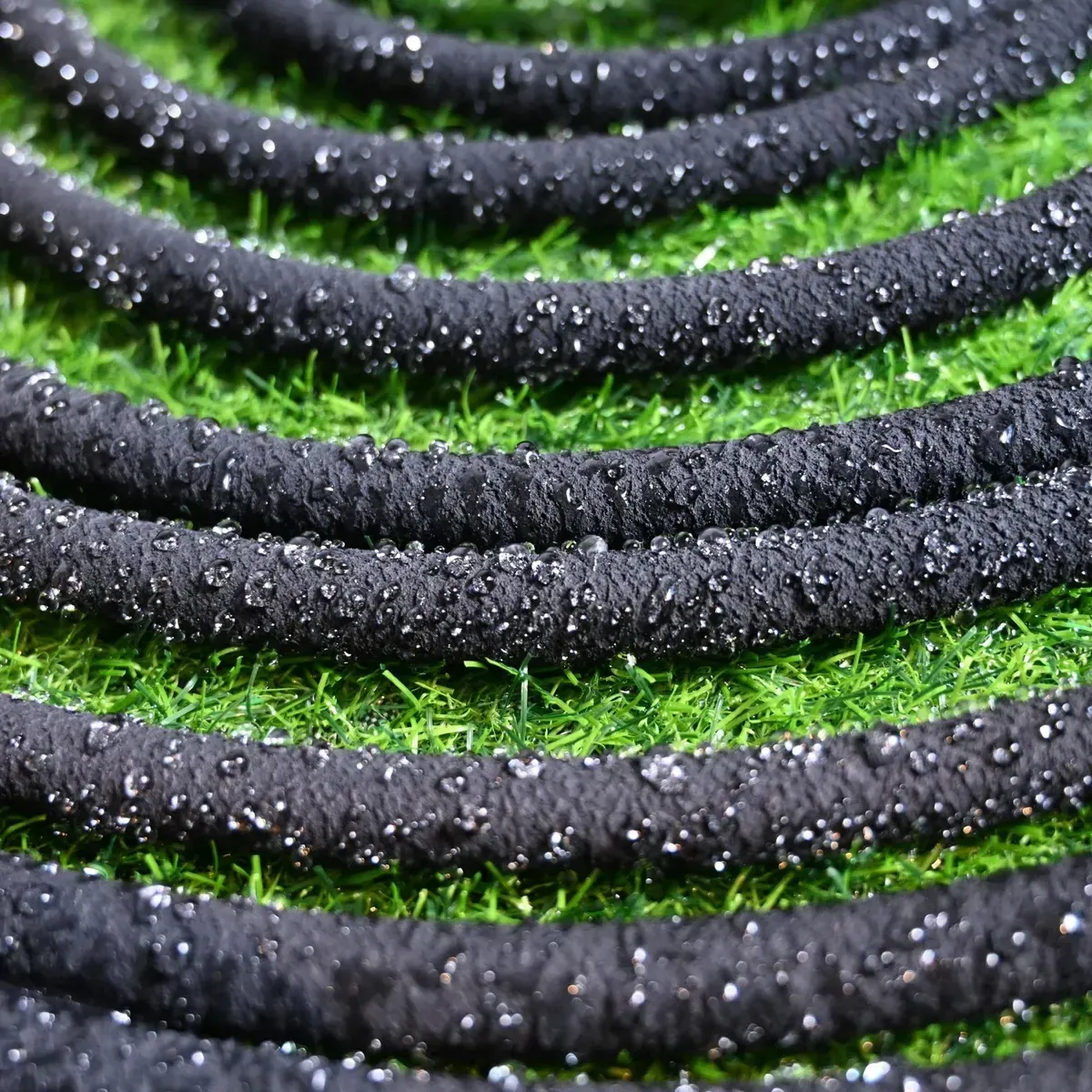
A soaker hose is porous along its full length, so it wets the soil in a continuous strip. There is nothing to space out or calculate; the customer lays it along the bed and turns the tap down. Drip irrigation is a system: tubing plus emitters placed at each plant, sometimes with stakes, connectors and a filter. That precision is the point for spaced plantings, but it is also more to buy, plan and maintain. For a first-principles look at the porous hose itself, see what a soaker hose is.
Where drip tape fits: soaker hose vs drip tape
Drip tape is a thin-walled flat line with emitters pre-punched at a fixed spacing, so it sits between a soaker hose and a full emitter system. Where a soaker hose seeps continuously along its whole wall, drip tape releases water at set outlets down a single flat ribbon, which is why it suits long, straight vegetable rows. The difference that matters for buyers is wall thickness and pressure tolerance: Clemson's Home & Garden Information Center notes that emitter drip tubing runs well near 30 PSI, while thin-wall drip tape needs only about 10 PSI and can rupture above 15 PSI, so a low-pressure regulator is essential (Clemson HGIC).
- Soaker hose has a heavier wall, seeps along its whole length, curves around borders and raised beds, and tolerates low regulated pressure without any pre-set outlets to clog.
- Drip tape is the cheapest per foot for long, straight, single-crop rows, but its thin wall makes it the most pressure-sensitive of the three, which is why growers often treat it as a seasonal consumable rather than a multi-year line.
- Both depend on the same two safeguards: a pressure regulator and an inline filter — Clemson specifies a 150 mesh screen for drip — to keep grit out of the pores or outlets.
For a retailer this is a stocking distinction, not a rivalry: drip tape suits the row-crop grower who replaces line each season, while soaker hose suits the mixed home and market-garden buyer who wants a curve-friendly line that lasts longer. pitta supplies the soaker and seepage side of this comparison, not drip tape.
Efficiency: both beat the sprinkler
Overhead sprinklers lose water to wind and evaporation before it reaches the soil. Soaker and drip both apply water at or near the root zone, so more of it does useful work. The US EPA WaterSense program highlights efficient outdoor watering as one of the biggest levers households have for cutting outdoor water use (epa.gov/watersense), and irrigation research summarized by the FAO reaches the same conclusion at scale. Used correctly on a suitable bed, a soaker line uses up to 70% less water than overhead sprinklers. Drip can be similarly efficient. The efficiency story sells both, which is why it belongs on the packaging and the listing.
Side by side: soaker hose vs drip vs sprinkler
| Soaker hose | Drip irrigation | Sprinkler | |
|---|---|---|---|
| Where the water goes | Continuous strip along the root line | Fixed points at each emitter | Over the canopy, wide area |
| Setup | Unroll, connect, regulate: minutes | Plan layout, cut tubing, place emitters: hours | Attach and aim: minutes |
| Parts involved | Hose, regulator, end cap | Tubing, emitters, stakes, connectors, filter | Sprinkler head only |
| Working pressure | Low; regulate down to about 15 PSI | Low; regulate down, plus filtration | Full tap pressure |
| Common failure | Split from over-pressure, clogged pores | Clogged emitters, layout errors | Wind drift, evaporation loss |
| Maintenance | Flush occasionally, store away from hard frost | Clean emitters, check each point | Little |
| Water efficiency outdoors | High at the root zone | High at the root zone | Lowest of the three |
| Typical retail ticket | Low | Higher, multi-part | Low |
One honest note on the pressure row: neither soaker nor drip has a single universal number, because wall thickness and fittings differ by manufacturer. Treat the regulator as the constant, and confirm working pressure per SKU with your supplier. For pitta SKUs, working and burst pressure are confirmed per order.
Cost, setup and maintenance
Soaker hose is the lowest-friction option: unroll, connect, add a regulator, done. Drip costs more up front and takes planning, and emitters can clog and need occasional cleaning. Soaker pores can also clog on hard water, which is why an end-cap filter and occasional flushing matter. The add-on parts stay cheap: Clemson's Home & Garden Information Center notes that a simple plastic pre-set irrigation regulator does the job and costs 50% to 75% less than the brass regulators sold in most hardware stores (Clemson HGIC). For a retailer, soaker hose is the easier sell to a casual gardener; drip appeals to the customer who wants control and will spend more to get it.
Does a soaker hose need pressure?
Yes, but far less than an outdoor tap delivers, and this question sits behind most soaker hose complaints. A soaker hose needs just enough pressure to push water through its pores evenly. Residential outdoor lines often run near 60 to 70 PSI, which is more than cheap porous hose can hold. The fix is not more pressure, it is controlled pressure: a 15 PSI regulator at the tap brings the line down to what the hose was built for, and the seep evens out along the run. Extension guidance frames the same principle for related low-pressure lines: Clemson's Home & Garden Information Center recommends regulating drip and tape systems down to roughly 30 PSI or 10 PSI respectively, and treats the regulator as a must-have rather than an optional extra (Clemson HGIC).
Three practical implications for buyers and the customers they sell to:
- Rain barrels and gravity feed work, with limits. A barrel raised a few feet delivers under 2 PSI, so a soaker hose will still seep, but slowly and only on short, level runs. It suits a small bed next to the barrel, not a long border.
- Run length is a pressure question. The longer the run from one connection, the less evenly the far end seeps. Common guidance converges on roughly 100 feet (30 m) per run as the practical ceiling; beyond that, split the bed into two lines from a Y-connector rather than one long line.
- Slopes change the math. Pressure drops as the line climbs, so uphill ends seep less. On sloped beds, run the hose across the slope rather than up it.
This is also why a regulator belongs next to the hose on the shelf, or inside the box as a kit: it removes the single most common cause of splits and returns before it happens.
Where each method wins
| Situation | Best method | Why |
|---|---|---|
| Vegetable rows and borders | Soaker hose | Even seeping along the whole row, minimal setup |
| Spaced shrubs and containers | Drip | Water only where the plants are |
| Hedges and raised beds | Soaker hose | Runs the length of the bed at the root line |
| Open lawn | Sprinkler | Covers a wide area quickly |
| Greenhouse and tunnel beds | PE seepage hose | Buried seepage line for controlled root-zone watering |
The honest downside list
Every watering method has failure modes, and a buyer who knows them stocks better and fields fewer returns. Here is where each one falls short.
Soaker hose disadvantages
- No per-plant control. It waters the whole strip, including gaps between plants. For widely spaced shrubs or containers it puts water where nothing grows; that is drip territory.
- Uneven seep on long or uphill runs. Pressure falls along the line, so far ends and high ends get less. Manageable with shorter runs and cross-slope layout, but it is real physics, not a defect.
- Pores can clog. Hard water and dirty source water gradually block pores. An end-cap flush a few times a season keeps seep rates up; skipping it shortens useful life.
- Sun exposure ages unprotected hose. UV-resistant compounds slow this down, ours included, but a mulch layer over the hose extends life further and cuts evaporation at the same time.
Drip irrigation disadvantages
- Cost and complexity up front. Tubing, emitters, stakes, connectors and a filter, plus the planning to place them. More to buy, more to explain, more that can be assembled wrong.
- Emitters clog and need checking plant by plant. One blocked emitter means one dry plant, and it is easy to miss until the damage shows.
- Less forgiving of layout changes. Rearrange the bed and the emitter map no longer matches the plants.
Sprinkler disadvantages
- Loses the most water outdoors. Wind drift and evaporation take their share before the soil sees it, which is exactly the comparison that sells root-zone watering.
- Wets foliage. Damp leaves in the evening invite fungal disease on many vegetables; root-zone methods avoid the issue.
What this means for your product mix
For most garden retailers and marketplace sellers, soaker hose is the higher-volume, lower-friction listing and drip is the specialist upsell. A common approach is to lead with a 1/2 inch soaker hose as the everyday product, add a 5/8 inch for longer runs, and carry a PE seepage hose for greenhouse and grower customers. The two return-killers for both categories are the same, so plan for them.
Pressure and clogging: the two return-killers
Whatever a customer picks, residential pressure is often too high for soaker and drip products, and that is what splits cheap hose. A 15 PSI pressure regulator keeps the line at its design pressure, and an end-cap filter keeps grit and hard water from clogging the pores or emitters. Clemson's Home & Garden Information Center is blunt about it: filters and pressure regulators are "a must for drip emitters, microsprayers, and drip tape," and it specifies a 150 mesh filter screen to stop plugging (Clemson HGIC). Stocking a soaker hose next to a regulator, or as a burst-proof kit, cuts the odds of a disappointed customer and a return.
What pitta supplies
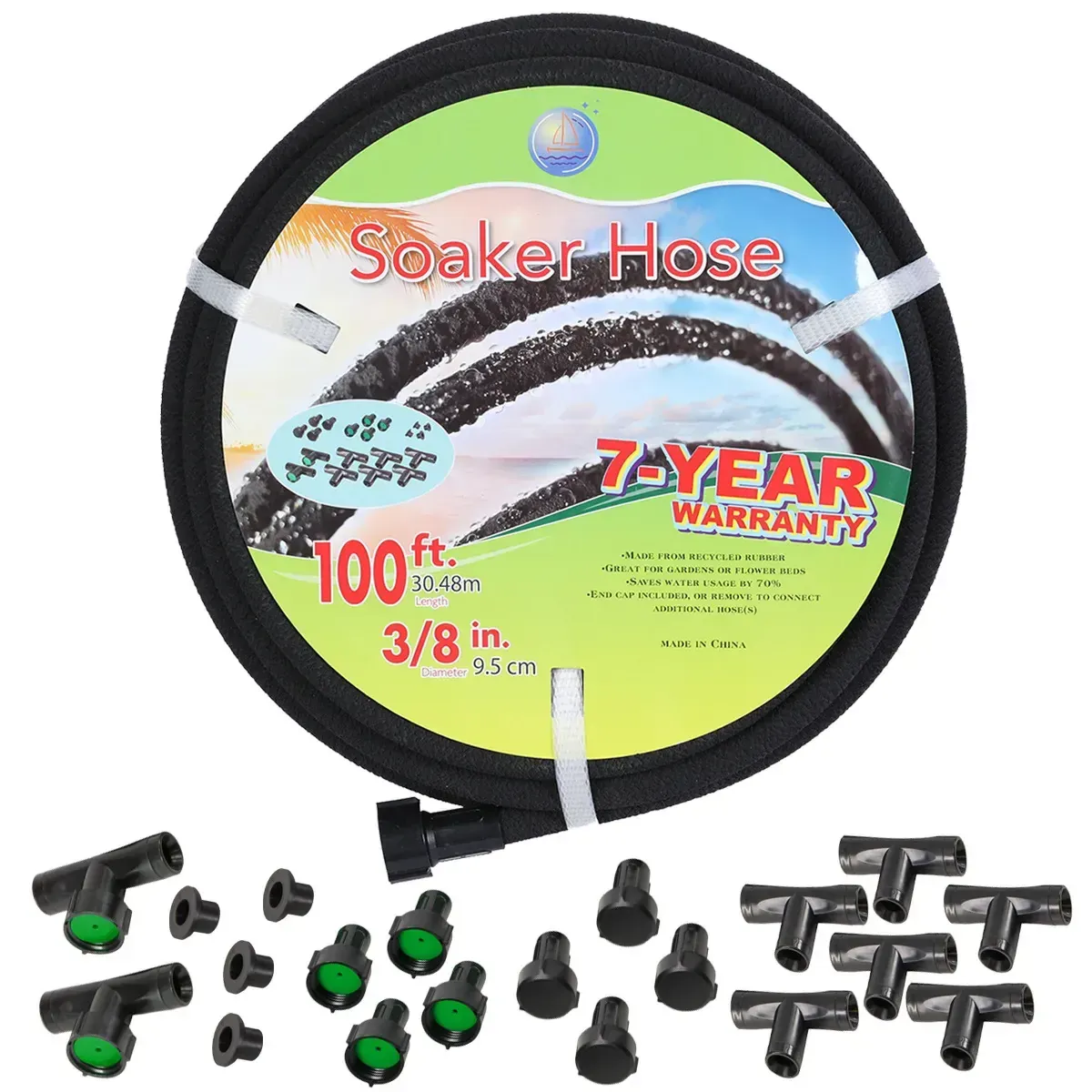
pitta focuses on the soaker and seepage side of this comparison: a US-registered brand supplied factory-direct from Qingdao, with 3/8 to 5/8 inch soaker hose in durable PE-rubber, a seepage hose for greenhouse beds, and a regulator kit. It ships at low, trial-friendly MOQ and is private-label ready. If drip is a separate line for you, soaker hose is the easy, fast-moving companion that most customers reach for first.
Deciding which watering line to carry? Send your target sizes and quantities and we will come back with specs, MOQ and lead time. Request a wholesale quote, or ask about sample availability so you can put a coil through a season before you commit.