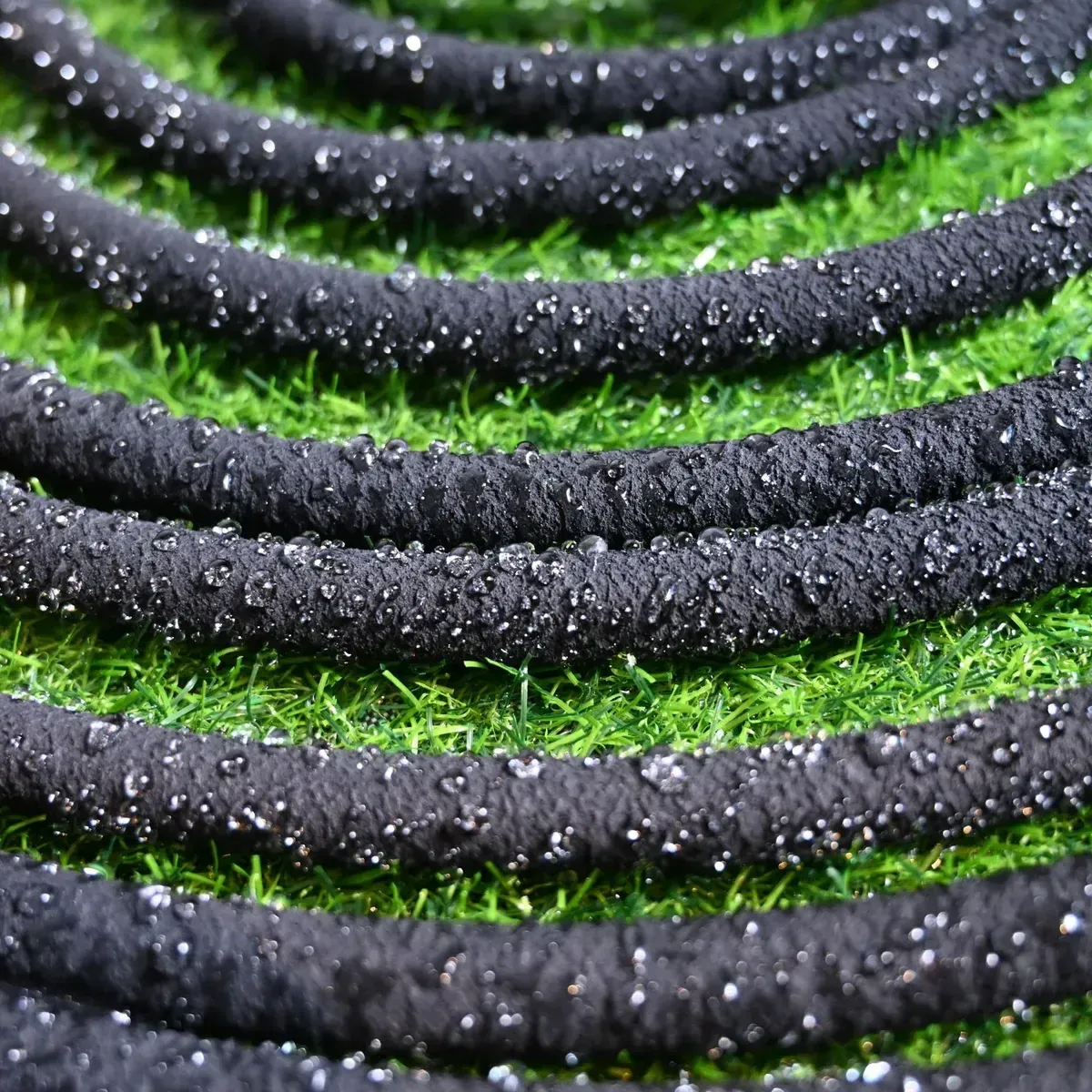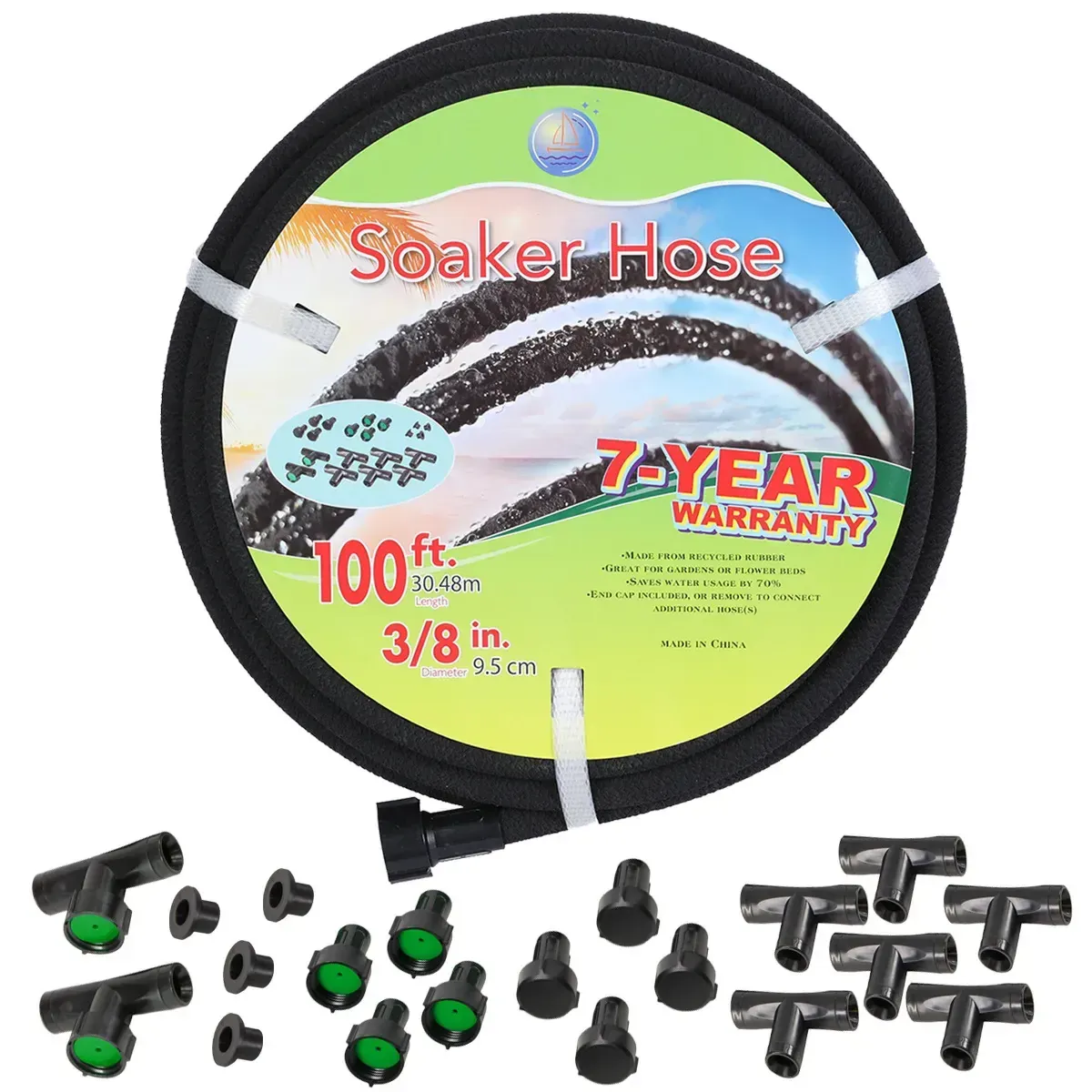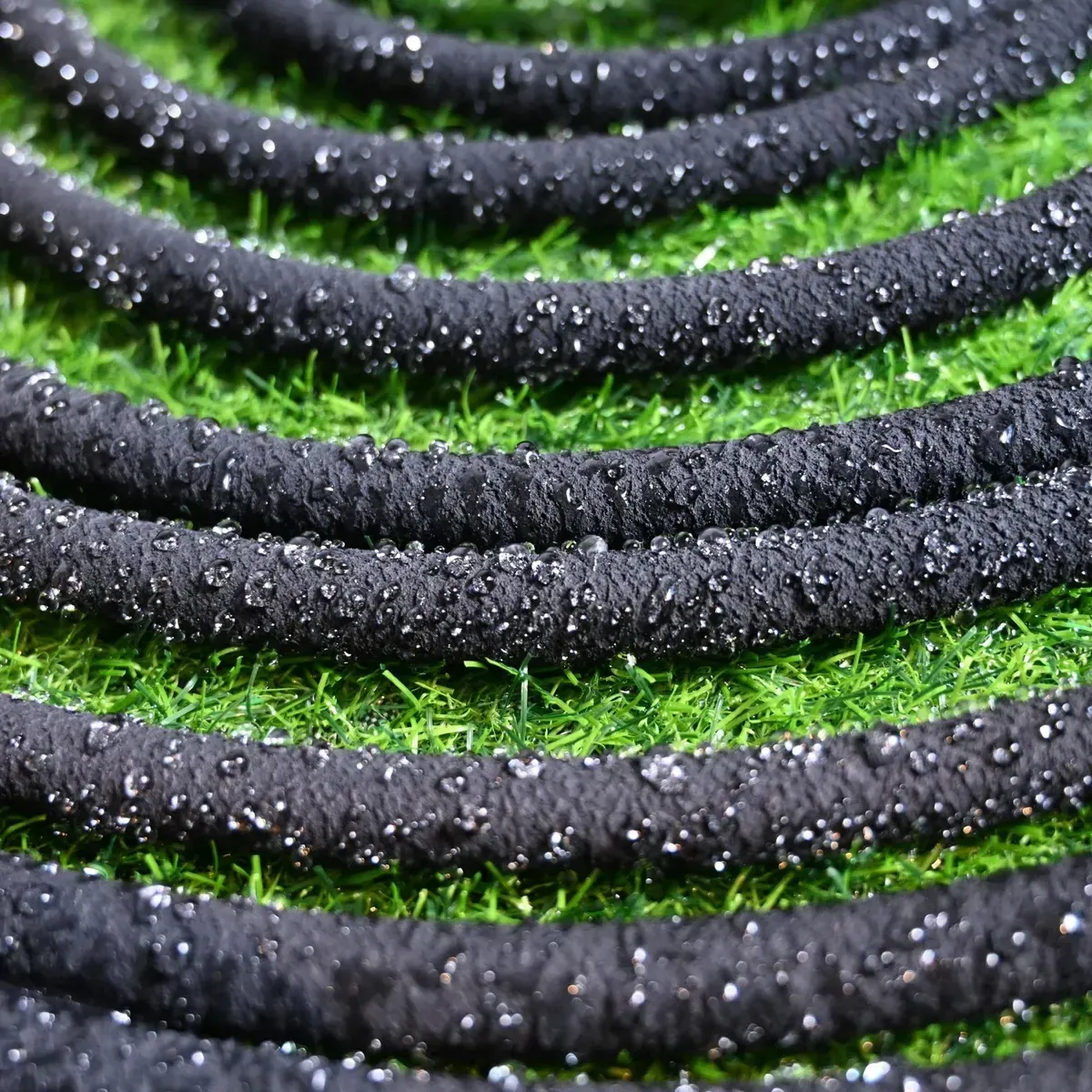

Raised beds, vineyard rows and greenhouse beds each ask something slightly different from a soaker hose. Match the diameter, run length and whether the line is surface-laid or buried to the application, and the same efficient root-zone watering works across all three. Here is how a distributor or grower should choose for each, and which hose fits.
Why root-zone watering wins in all three
Raised beds, rows and greenhouse beds all reward water delivered at the root line rather than sprayed over the canopy. Less is lost to evaporation and wind, and foliage stays dry, which matters for disease pressure under cover. The U.S. EPA's WaterSense program documents how efficient outdoor watering cuts water use (epa.gov/watersense), and irrigation-efficiency research summarized by the FAO reaches the same conclusion for row crops at scale: water applied at the root zone is water that reaches the plant.
Raised beds: 1/2" round soaker, one loop per bed
Raised beds are the classic soaker application. A 1/2" round soaker hose laid in a single loop per bed seeps evenly along the whole planting area. Keep each run to a manageable length so the far end seeps as well as the near end, connect beds with tee and elbow fittings, and fit a pressure regulator on a residential line. For a garden retailer, this is the highest-volume use case and the easiest to explain to a customer.
Vineyard and orchard rows: 5/8" for longer runs
Rows are longer than beds, so flow and even distribution over distance matter more. A 5/8" hose carries more flow for a long run than a 1/2" line, which helps the end of the row keep up with the start. For growers who want a buried, controlled line rather than a surface hose, PE seepage hose is the better fit. Standardizing on hose sizing and tolerances is what bodies such as ASTM International exist to define, so confirm which spec a supplier measures against when you compare diameters.
Greenhouse and tunnel beds: buried PE seepage hose
Under cover, keeping foliage dry and water at the root zone reduces humidity-driven disease and wasted water. A buried PE seepage irrigation hose is built for exactly this: a controlled seepage line for greenhouse and tunnel beds. It delivers water below the surface at the root zone rather than wetting the canopy.
Pressure and burial apply everywhere
Whatever the application, two things hold: residential pressure is often too high for soaker and seepage products, so a 15 PSI pressure regulator protects the line and prevents bursting; and an end-cap filter plus occasional flushing keeps the pores from clogging on hard water. A burst-proof kit bundles both. For a broader stocking view across sizes and materials, see how to choose soaker hose for distributors and garden retail.
A stocking guide by application
| Application | Best hose | Why |
|---|---|---|
| Raised beds and borders | 1/2" round soaker | Even seep in one loop per bed, easy to explain and install |
| Vineyard and orchard rows | 5/8" round soaker | More flow for long runs, even distribution over distance |
| Greenhouse and tunnel beds | PE seepage hose | Buried, controlled root-zone watering without wetting foliage |
| Any residential line | Add a pressure regulator | Prevents the bursting that drives returns |
Frequently asked questions
Which soaker hose is best for raised beds?
A 1/2" round soaker hose, run as one loop per bed at the root line, with a pressure regulator on a residential line.
Can soaker hose be used in a vineyard or orchard row?
Yes. Run soaker or seepage hose along the row for root-zone watering; a 5/8" hose carries more flow for longer rows, and buried PE seepage hose suits controlled watering.
Is soaker hose suitable for a greenhouse?
Buried PE seepage hose suits greenhouse and tunnel beds, watering at the root zone without wetting foliage.
Stocking soaker hose for a specific application? Tell us the beds, rows or greenhouse setup you serve and your quantities, and we will recommend the right size and quote it. Request a wholesale quote.